A pool filter pressure gauge that’s climbing or dropping is telling you exactly where to look. A normal reading sits close to the clean baseline, the PSI recorded right after backwashing a sand or DE filter or rinsing a cartridge, usually somewhere between 10 and 25 psi depending on the system. When that number drops well below normal, the problem sits upstream of the filter, something restricting flow into the pump. When it climbs 8 to 10 psi above the clean baseline, the filter itself is choked and needs cleaning.
Refresh Pool Pros connects San Diego homeowners with vetted pool repair specialists who diagnose pressure problems before anyone orders parts. This guide walks through what the gauge is actually measuring, what a low reading means versus a high one, and when a five-minute filter clean is enough versus when it’s time to call someone.
What’s a normal filter pressure reading?
Most residential systems run somewhere between 10 and 25 psi on a clean filter, but the exact number depends on your pump size, filter type, and plumbing layout. What matters more than the absolute number is your own baseline: write down the PSI right after you backwash or rinse the filter, and treat that as zero. A pool running at 18 psi clean and climbing to 26 psi over three weeks is telling you the same story as a pool running at 12 psi clean and climbing to 20, because both have drifted 8 psi past their starting point. Track the gap, not the raw number.
Why is my pool losing pressure? (low readings)
Low pressure means the pump isn’t getting enough water to work with, and the cause is almost always something blocking flow before the water reaches the filter. Start with the obvious spots: a skimmer basket packed with leaves, a pump basket full of debris, or a valve that’s been bumped partially closed. Water level matters too. If the pool has dropped below the skimmer opening, the skimmer starts pulling air instead of water, and the gauge reads low even though nothing is technically broken.
Beyond the baskets and valves, a low reading can mean an air leak on the suction side of the system, often at the pump lid o-ring, a loose union, or a cracked fitting before the pump. Air in the line shows up as bubbles at the return jets and a pump that sounds like it’s straining. If your pump is leaking water at the same time pressure is low, the two are often connected, since a failing seal can pull air in on the suction side while pushing water out somewhere else. A pump that won’t hold prime or won’t turn on at all points to a different problem, but it’s worth ruling out before assuming the gauge itself is at fault.
Why is my pressure reading high?
High pressure means the filter is doing its job too well and clogging up in the process. Dirt, oils, and fine debris build up in a cartridge’s pleats or a sand bed over weeks of normal use, and once enough has accumulated, water has to push harder to get through, which is exactly what the gauge shows. In San Diego, hard water adds a second layer to this. Calcium in the water deposits on cartridge pleats and sand media the same way it scales a shower head, and that mineral buildup doesn’t always rinse away with a normal cleaning. Pools in harder-water pockets around East County, Poway, and Rancho Bernardo tend to see pressure climb faster between cleanings than pools running on softer coastal supply.
The threshold to act on is 8 to 10 psi above your clean baseline. Below that, the filter is doing normal work. Above it, flow is restricted enough that the pump works harder than it needs to, which shows up as extra runtime on your SDG&E bill over a season even before anything actually breaks.
Weak return jets: what that tells you
If the gauge reads normal but the return jets feel weak, the restriction usually isn’t in the filter at all. A partially closed valve somewhere in the system, a clogged impeller inside the pump housing, or plumbing that’s undersized after a past repair can all starve the returns even while the pressure gauge looks fine, since the gauge only measures what’s happening at that one point in the system. Running multiple accessories off the same pump, like an in-floor cleaner or a water feature, can also pull flow away from the returns without moving the gauge much. Weak jets alongside a normal or low reading is a good reason to have someone trace the plumbing rather than keep cleaning a filter that isn’t the problem.
DIY clean vs when to call a pro
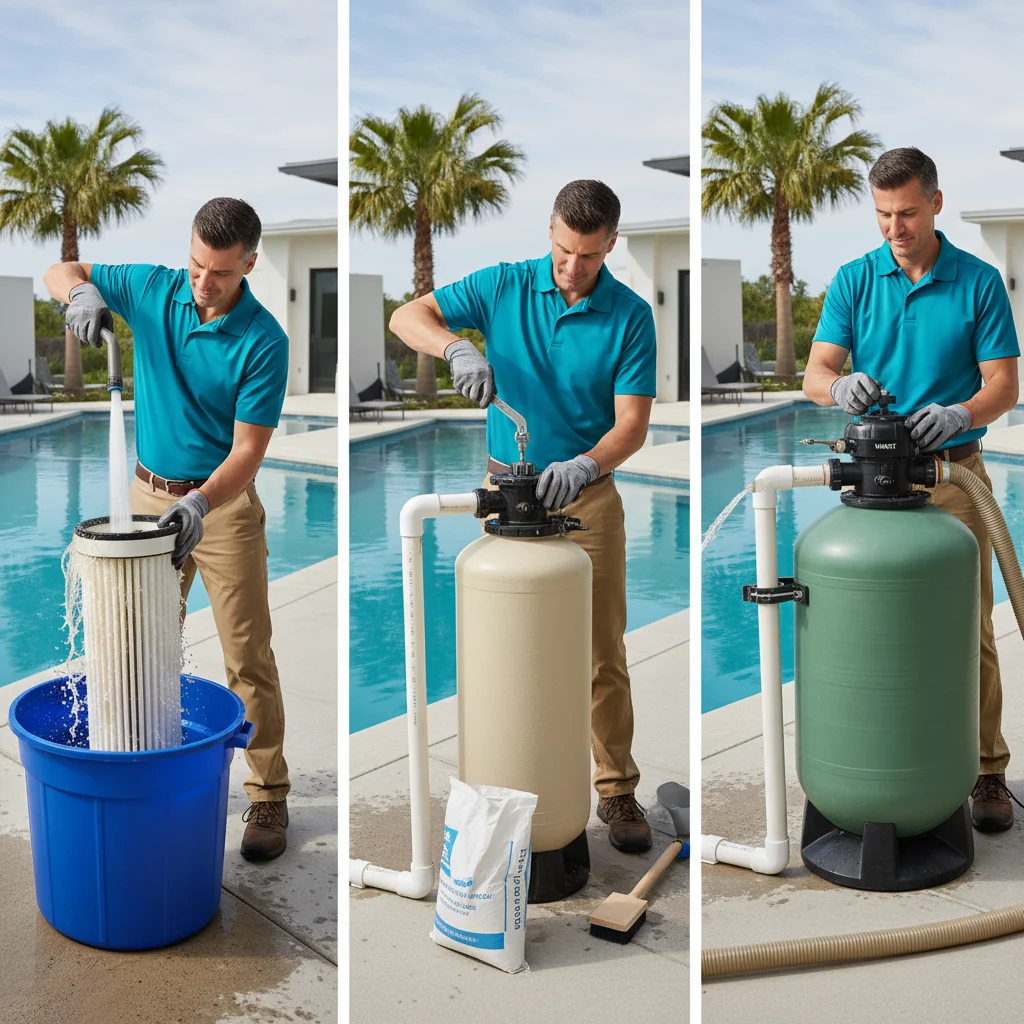
Backwashing a sand or DE filter, or pulling and hosing off a cartridge, is a job most homeowners can handle in fifteen minutes, and it’s the right first move whenever pressure climbs past your clean baseline. Rinse cartridges thoroughly between the pleats, not just across the surface, since packed debris hides deep in the folds.
Call a pro when the cleaning doesn’t hold. If pressure stays high right after a thorough cleaning, spikes back up within a day or two, or the gauge barely moves no matter what you do, that points to scaled-out media that needs an acid soak or filter replacement rather than a rinse. On the low-pressure side, if you’ve checked the baskets, valves, and water level and pressure is still down, a failing impeller or a suction leak is a repair, not a cleaning. Coastal salt air in areas like Coronado, La Jolla, and Pacific Beach also corrodes gauges and valve seats faster than inland yards see, which can throw readings off even when flow itself is fine.
Refresh Pool Pros connects San Diego homeowners with vetted pool repair specialists who read the gauge correctly and fix the actual cause instead of guessing. The network also covers pool equipment upgrades for pumps and filters that have simply reached the end of their service life, and our equipment upgrade guide walks through when replacing beats repairing. Homeowners in San Diego, Carlsbad, and across the county can get matched with a specialist who knows the local water conditions behind a stubborn gauge reading.
Frequently asked questions
What’s a normal pressure reading on my pool filter gauge?
A normal reading sits close to your filter’s clean baseline, the PSI you see right after backwashing a sand or DE filter or rinsing a cartridge, usually somewhere between 10 and 25 psi depending on the system and pump size. What matters isn’t the exact number but the gap between that baseline and today’s reading. A gauge climbing more than 8 to 10 psi above clean means the filter needs attention.
Why is my pool filter pressure low?
Low pressure almost always points to a restriction on the suction side, before water even reaches the filter. A clogged skimmer basket, a clogged pump basket, a partially closed valve, or a water level that’s dropped below the skimmer opening can all starve the pump of flow. An air leak at the pump lid o-ring or a suction-side fitting will also drag the reading down, often alongside a hissing sound or visible bubbles at the returns.
Why is my pool filter pressure high?
High pressure means the filter itself is choked and can’t push water through as easily. Dirt, debris, and body oils build up in a cartridge or sand bed over normal use, and San Diego’s hard water adds calcium scaling on top of that, hardening onto cartridge pleats or coating a sand bed until backwashing barely restores flow. A reading that climbs 8 to 10 psi above your clean baseline is the signal to clean or backwash.
How often should I backwash or clean my filter?
Clean by pressure, not by the calendar. Backwash a sand or DE filter, or hose off a cartridge, once the gauge climbs 8 to 10 psi above the reading you recorded right after the last cleaning. Most San Diego pools land on a cleaning every two to six weeks depending on bather load, nearby trees, and how hard the local water is, but the gauge is the real signal, not a fixed schedule.
Can hard water cause high filter pressure in San Diego?
Yes. Much of San Diego County runs on moderate to hard water, and the calcium in it deposits on cartridge pleats and sand media over time, similar to how it scales a shower head. That buildup makes the filter harder to push water through even right after a cleaning, so pressure climbs faster and the clean baseline itself creeps upward year over year until a deeper acid soak or media replacement is needed.
When should I call a pool repair pro instead of cleaning the filter myself?
Clean the filter yourself first since it’s the most common fix. Call a pro if pressure stays high right after a thorough cleaning, if it spikes back up within a day or two, if the gauge won’t move at all, or if low pressure continues after checking the baskets, valves, and water level. Those patterns point to a failing impeller, a suction leak, or scaled-out media that a cleaning can’t fix.
If your filter gauge won’t settle down no matter how many times you clean it, call Refresh Pool Pros at (858) 400-4598 to get matched with a vetted San Diego pool repair specialist who can trace the real cause.
Frequently asked questions
What's a normal pressure reading on my pool filter gauge?
A normal reading sits close to your filter's clean baseline, the PSI you see right after backwashing a sand or DE filter or rinsing a cartridge, usually somewhere between 10 and 25 psi depending on the system and pump size. What matters isn't the exact number but the gap between that baseline and today's reading. A gauge climbing more than 8 to 10 psi above clean means the filter needs attention.
Why is my pool filter pressure low?
Low pressure almost always points to a restriction on the suction side, before water even reaches the filter. A clogged skimmer basket, a clogged pump basket, a partially closed valve, or a water level that's dropped below the skimmer opening can all starve the pump of flow. An air leak at the pump lid o-ring or a suction-side fitting will also drag the reading down, often alongside a hissing sound or visible bubbles at the returns.
Why is my pool filter pressure high?
High pressure means the filter itself is choked and can't push water through as easily. Dirt, debris, and body oils build up in a cartridge or sand bed over normal use, and San Diego's hard water adds calcium scaling on top of that, hardening onto cartridge pleats or coating a sand bed until backwashing barely restores flow. A reading that climbs 8 to 10 psi above your clean baseline is the signal to clean or backwash.
How often should I backwash or clean my filter?
Clean by pressure, not by the calendar. Backwash a sand or DE filter, or hose off a cartridge, once the gauge climbs 8 to 10 psi above the reading you recorded right after the last cleaning. Most San Diego pools land on a cleaning every two to six weeks depending on bather load, nearby trees, and how hard the local water is, but the gauge is the real signal, not a fixed schedule.
Can hard water cause high filter pressure in San Diego?
Yes. Much of San Diego County runs on moderate to hard water, and the calcium in it deposits on cartridge pleats and sand media over time, similar to how it scales a shower head. That buildup makes the filter harder to push water through even right after a cleaning, so pressure climbs faster and the clean baseline itself creeps upward year over year until a deeper acid soak or media replacement is needed.
When should I call a pool repair pro instead of cleaning the filter myself?
Clean the filter yourself first since it's the most common fix. Call a pro if pressure stays high right after a thorough cleaning, if it spikes back up within a day or two, if the gauge won't move at all, or if low pressure continues after checking the baskets, valves, and water level. Those patterns point to a failing impeller, a suction leak, or scaled-out media that a cleaning can't fix.
Need professional help in San Diego County?
Refresh Pool Pros provides every service in this post. Call for a free quote.