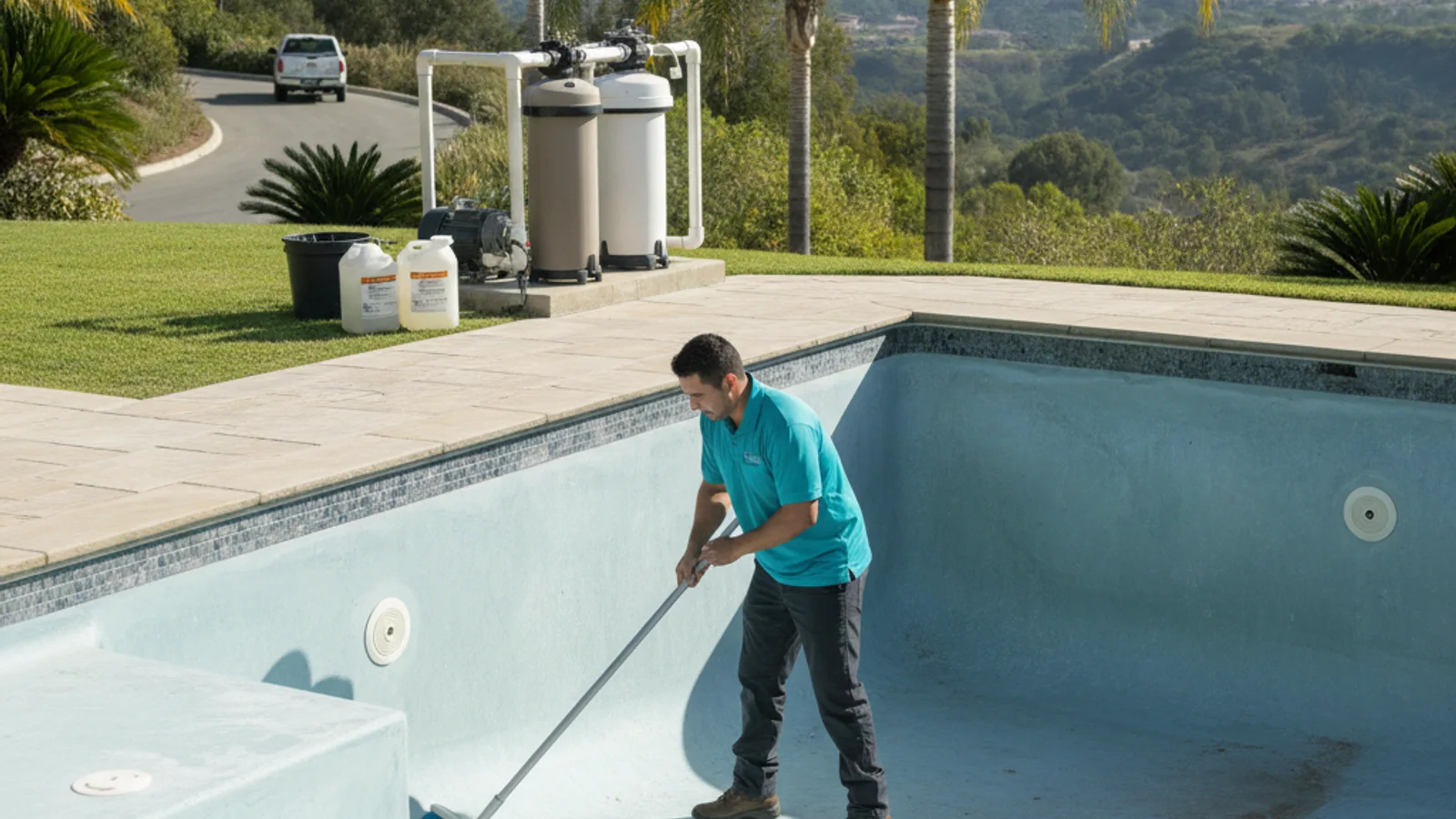
A standard pool acid wash in San Diego costs $300 to $600, covering the drain, the acid wash itself, and the refill. Pools that are larger or carry heavy staining and calcium scale run $600 to $1,000 or more. A gentler drain and chlorine wash, which lifts organic stains without etching the plaster, runs less at $150 to $350. Where your job lands depends on pool size, how deep the staining goes, and the cost of refilling on San Diego water rates.
Refresh Pool Pros connects San Diego homeowners with vetted pool specialists who will tell you whether a wash is even the right move before anyone drains the pool. This guide breaks down real acid wash pricing, when a cheaper chlorine wash does the job, and the point where washing stops making sense and resurfacing takes over.
How much does a pool acid wash cost in San Diego?
A standard acid wash on an average backyard pool runs $300 to $600 across most of San Diego County. That price covers draining the shell, washing the plaster with a diluted acid solution to strip stains and scale, neutralizing the runoff, and refilling. The number climbs on bigger pools, on shells with years of hardened calcium, and when the staining is heavy enough to need a second pass. Refill water is a real line item too, since a mid-size pool holds 15,000 to 20,000 gallons and San Diego water rates aren’t cheap. Ask whether the quote includes the refill or leaves it on your bill.
What’s the difference between an acid wash and a drain and clean?
A drain and clean is the lighter, cheaper option at $150 to $350, and it leaves the plaster alone. The crew empties the pool, rinses the shell, and uses a chlorine wash to kill algae and lift organic stains off the surface. An acid wash goes deeper. It uses diluted muriatic acid to etch away a thin top layer of plaster, taking mineral stains and bonded calcium with it. If your problem is a season of algae or a dirty-looking surface, a chlorine wash often clears it. If the stains are mineral, metal, or set deep into the plaster, acid is what reaches them. The tradeoff is that acid washing removes plaster you can’t get back, so it’s the stronger tool used less often.
When is an acid wash the right call, and when do you need resurfacing?
Acid wash when the plaster is still smooth and the trouble is only skin deep; resurface when the plaster itself has failed. A quick way to sort it out:
- Surface stains, smooth plaster, no rough spots: acid wash, $300 to $600.
- Algae or organic grime, plaster still sound: drain and chlorine wash, $150 to $350.
- Rough or pitted texture underfoot, gray patches showing through: the finish is spent, and an acid wash won’t fix it. That’s resurfacing territory.
- Cracks, hollow spots, or unexplained water loss: structure first. Get leak detection or cracked plaster sorted before any cosmetic work.
An acid wash strips only a thin layer, so it can brighten a tired-looking surface but can’t rebuild one that’s breaking down. Our guide on the signs a pool needs resurfacing covers how to read the plaster, and the pool resurfacing cost breakdown shows what the bigger job runs if the wash isn’t enough.
Why do San Diego pools stain and scale in the first place?
Most of it comes down to hard water and sun. The City of San Diego supply runs 10 to 14 grains per gallon, and Helix Water District customers in El Cajon and La Mesa see 16 to 20 grains, some of the hardest municipal water in the state. Every refill adds calcium, evaporation concentrates it, and it deposits as white scale along the waterline and across the plaster. Metal in older plumbing leaves rust and copper staining, and algae blooms in a neglected pool bond color into a porous finish. Inland heat in Chula Vista and Santee speeds evaporation and concentrates minerals faster, while the salt air along La Jolla works on surfaces its own way. An acid wash resets the look, but if the water chemistry that caused it doesn’t change, the staining comes back.
How often can a pool be acid washed?
Not as often as you’d think, and that’s the honest limit worth knowing before you sign. A San Diego plaster pool can usually take an acid wash every five to seven years, and only a few times across the life of the finish. Each wash etches off a thin layer of plaster, so a shell washed three or four times is often close to needing resurfacing anyway. Chasing recurring stains with frequent washes just burns through the plaster and pulls the resurfacing bill forward. If a pool needs washing every couple of years to stay presentable, the smarter money is often a longer-lasting finish. Our pool plaster versus quartz versus pebble comparison covers which surfaces hold up best against hard water.
Is it safe to drain a pool for an acid wash in San Diego?
Usually, but the draining is the part that needs a pro, not a weekend. An empty pool sitting on saturated ground can float or lift out of position from hydrostatic pressure, and that risk is real in low-lying and coastal parts of the county after a wet winter. A specialist checks the hydrostatic relief valve and the groundwater before pulling the plug, and schedules the drain for dry conditions. Runoff matters too, since acid wash water has to be neutralized and handled to code, not sent down a storm drain. This is why a $400 job done wrong can turn into a structural repair, and why draining is best left to someone who does it every week.
Refresh Pool Pros connects homeowners across San Diego with vetted pool repair specialists who will tell you straight whether a wash, a resurface, or nothing at all is the right spend. Because staining sometimes travels with equipment or chemistry problems, the same network includes pros for pool equipment and full renovation work when an inspection turns up more than a dirty surface.
Frequently asked questions
How much does a pool acid wash cost in San Diego?
A standard pool acid wash in San Diego runs $300 to $600, which covers draining the pool, washing the plaster with a diluted acid solution, and refilling. Larger pools or shells with heavy staining and calcium buildup run $600 to $1,000 or more. A plain drain and chlorine wash, which handles organic stains without acid, costs less at $150 to $350. Pool size, stain severity, and refill water are what move the price.
What is the difference between an acid wash and a drain and clean?
A drain and clean rinses the empty shell and uses a chlorine wash to kill algae and lift organic stains, and it leaves the plaster untouched. An acid wash goes further, using diluted muriatic acid to etch off a thin top layer of plaster along with the stains and calcium bonded into it. Acid washing works on mineral and deep staining a chlorine wash can’t reach, but because it removes plaster, it’s the more aggressive and less repeatable option.
When should I resurface instead of acid washing?
Acid wash when the plaster is still smooth and the problem is stains or scale sitting on the surface. Resurface when the plaster feels rough, gritty, or pitted underfoot, when you see gray patches showing through, or when the shell is losing water through cracks. An acid wash only strips a thin layer, so it can’t fix plaster that has already broken down. A specialist can tell the difference in a short inspection before you spend on the wrong job.
How often can a pool be acid washed?
Most San Diego plaster pools can handle an acid wash every five to seven years, and only a handful of times over the life of the finish. Each wash removes a thin layer of plaster, so a shell that’s been acid washed three or four times is usually close to needing resurfacing anyway. Washing more often than that to chase recurring stains burns through the plaster faster and moves up the resurfacing bill.
Is it safe to drain a pool for an acid wash in San Diego?
Usually, but not always, and this is where a pro matters. An empty pool sitting on a high water table can float or pop out of the ground from hydrostatic pressure, which is a real risk in low-lying and coastal San Diego areas after a wet winter. A specialist checks the hydrostatic relief valve and groundwater conditions before draining, and picks the timing accordingly. Draining a pool yourself without those checks is how a cosmetic job turns into a structural one.
Will an acid wash get rid of a green pool?
It can, when the green is algae staining bonded into the plaster that a normal cleanup won’t lift. If the water is green but the plaster underneath is sound, balancing the water and running the filter clears most cases far cheaper than draining. If the pool has sat green for months and the algae has stained the surface, draining and acid washing the bare shell is often the reset that a chemical treatment can’t deliver.
If your plaster is stained, scaled, or looking tired, call Refresh Pool Pros at (858) 400-4598 to get matched with a vetted San Diego specialist who will tell you whether a $400 acid wash or a full resurface is the honest fix before you drain a drop.
Frequently asked questions
How much does a pool acid wash cost in San Diego?
A standard pool acid wash in San Diego runs $300 to $600, which covers draining the pool, washing the plaster with a diluted acid solution, and refilling. Larger pools or shells with heavy staining and calcium buildup run $600 to $1,000 or more. A plain drain and chlorine wash, which handles organic stains without acid, costs less at $150 to $350. Pool size, stain severity, and refill water are what move the price.
What is the difference between an acid wash and a drain and clean?
A drain and clean rinses the empty shell and uses a chlorine wash to kill algae and lift organic stains, and it leaves the plaster untouched. An acid wash goes further, using diluted muriatic acid to etch off a thin top layer of plaster along with the stains and calcium bonded into it. Acid washing works on mineral and deep staining a chlorine wash can't reach, but because it removes plaster, it's the more aggressive and less repeatable option.
When should I resurface instead of acid washing?
Acid wash when the plaster is still smooth and the problem is stains or scale sitting on the surface. Resurface when the plaster feels rough, gritty, or pitted underfoot, when you see gray patches showing through, or when the shell is losing water through cracks. An acid wash only strips a thin layer, so it can't fix plaster that has already broken down. A specialist can tell the difference in a short inspection before you spend on the wrong job.
How often can a pool be acid washed?
Most San Diego plaster pools can handle an acid wash every five to seven years, and only a handful of times over the life of the finish. Each wash removes a thin layer of plaster, so a shell that's been acid washed three or four times is usually close to needing resurfacing anyway. Washing more often than that to chase recurring stains burns through the plaster faster and moves up the resurfacing bill.
Is it safe to drain a pool for an acid wash in San Diego?
Usually, but not always, and this is where a pro matters. An empty pool sitting on a high water table can float or pop out of the ground from hydrostatic pressure, which is a real risk in low-lying and coastal San Diego areas after a wet winter. A specialist checks the hydrostatic relief valve and groundwater conditions before draining, and picks the timing accordingly. Draining a pool yourself without those checks is how a cosmetic job turns into a structural one.
Will an acid wash get rid of a green pool?
It can, when the green is algae staining bonded into the plaster that a normal cleanup won't lift. If the water is green but the plaster underneath is sound, balancing the water and running the filter clears most cases far cheaper than draining. If the pool has sat green for months and the algae has stained the surface, draining and acid washing the bare shell is often the reset that a chemical treatment can't deliver.
Need professional help in San Diego County?
Refresh Pool Pros provides every service in this post. Call for a free quote.